Electrical automation system integration
A production-line control system succeeds only when power, drives, PLC/HMI, instrumentation, cabinets, communication and field commissioning close as one engineering scope.
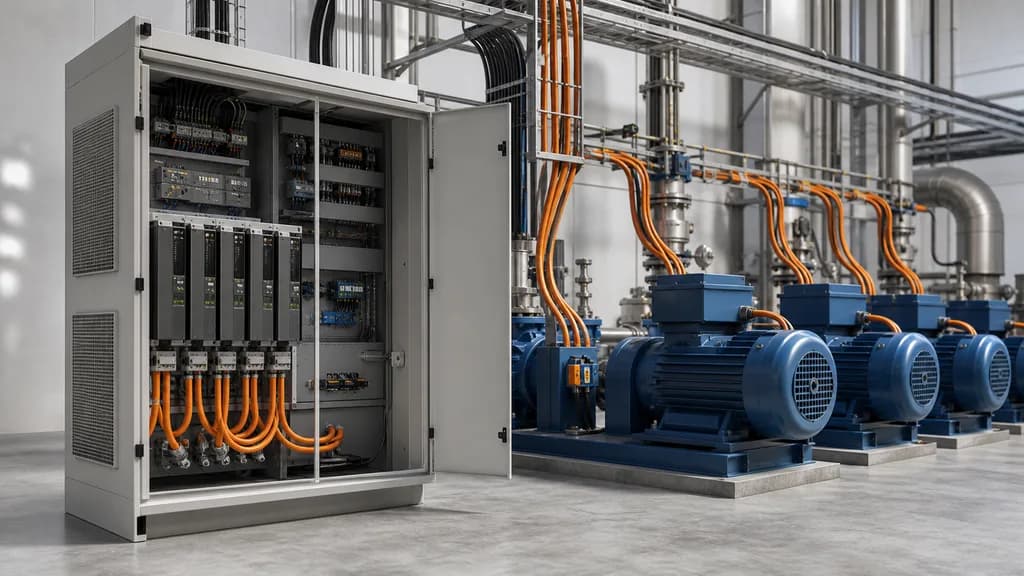
The system behind coordinated control
Drives, motors, control cabinets and industrial communication work as one engineered system.
Conceptual visualization — not a client project or site record.Where this solution fits
- New production-line electrical automation packages
- Multi-vendor systems with unclear interfaces or fragmented responsibility
- Modernization requiring old and new equipment to operate together
- Projects requiring design, cabinet integration, software and commissioning from one team
Engineering scope
- 01Control, drive and power-distribution architecture
- 02Electrical drawings, cabinets, wiring and field interfaces
- 03PLC/HMI, industrial communication and device integration
- 04Instrumentation, signals, interlocks and protection coordination
- 05Installation support, commissioning, documentation and training
How the control is structured
- 01
Interface-first design
Mechanical, electrical, drive, control and process boundaries are defined before detailed implementation.
- 02
Version discipline
Drawings, software, parameters and field changes stay aligned through review and as-built handover.
- 03
Layered verification
Power, I/O, individual drives, interlocks and coordinated operation are tested in controlled stages.
- 04
One accountable engineering chain
The same engineering context connects design decisions to cabinet integration, software and field results.
Typical deliverables
- System architecture and engineering scope
- Electrical design and cabinet package
- PLC/HMI and drive configuration
- Interface, I/O and network documentation
- Commissioning, issue closure and as-built handover
Related engineering evidence
Representative projects
High-speed winder drive control5600 mm width · 1500 m/min · double-drum windingView project →Wide paper-machine sectional drive & MCS4800 mm width · 750 m/min · single fourdrinierView project →5360 mm rewinder drive control5360 mm width · 2200 m/min · double-drum windingView project →Related insights
Our three-level drive control architectureField drives, a control core, and an operator layer — three levels, one coordinated machine. Here is how we structure drive control for a wide, high-speed line.Read insight →Why our drives share a common DC bus with regenerationOn a winder or a sectional paper machine, braking energy is too valuable to waste as heat. A shared DC bus lets every drive section return that energy to the grid instead.Read insight →The standards our drive systems are built toEvery drive and MCS we deliver is engineered against the GB and IEC standards that govern electrical terminology, EMC, rotating machines and low-voltage switchgear.Read insight →The final supply boundary, installation responsibility, acceptance criteria and document list must be confirmed in the project scope. Public website descriptions do not replace a technical agreement.