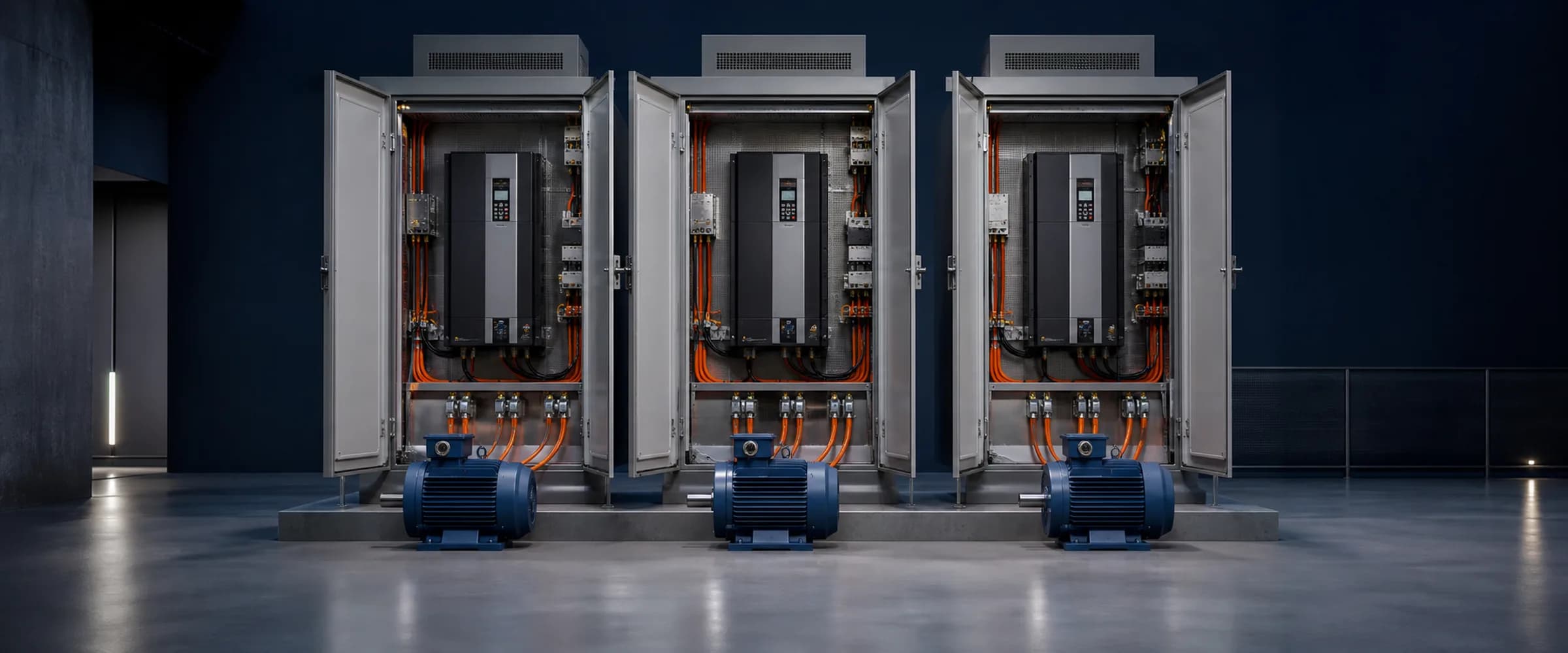
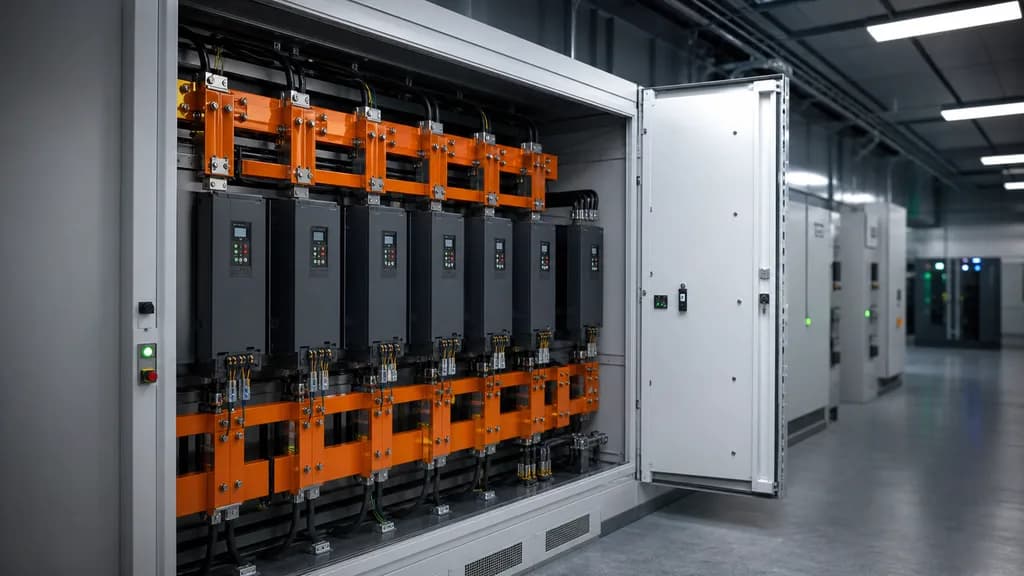
For the high-speed winder and the wide paper-machine drives we build, every section hangs off one common DC bus fed by a single rectifier. When a section decelerates — a winder during its deceleration stop, or a machine section slowing under load — its inverter acts as a generator. Instead of dissipating that energy in brake resistors, the shared bus routes it to whichever section is accelerating, and any surplus is returned to the grid through a regenerative unit.
The payoff is twofold. Energy that would have been lost as heat is recovered, and the DC link smooths the peaks and troughs of a multi-section line so individual drives are not oversized for worst-case demand. The result is a smaller, cooler, more efficient cabinet line.
Both our winder and paper-machine systems use this backbone with all-digital AC inverters sharing the bus, the field and control levels talking over industrial Ethernet, and the whole machine coordinated from a single control core.