Winder drive and tension control
Roll diameter and inertia change throughout winding. Stable production depends on tension, torque difference, rider-roll pressure and deceleration acting together rather than as isolated loops.
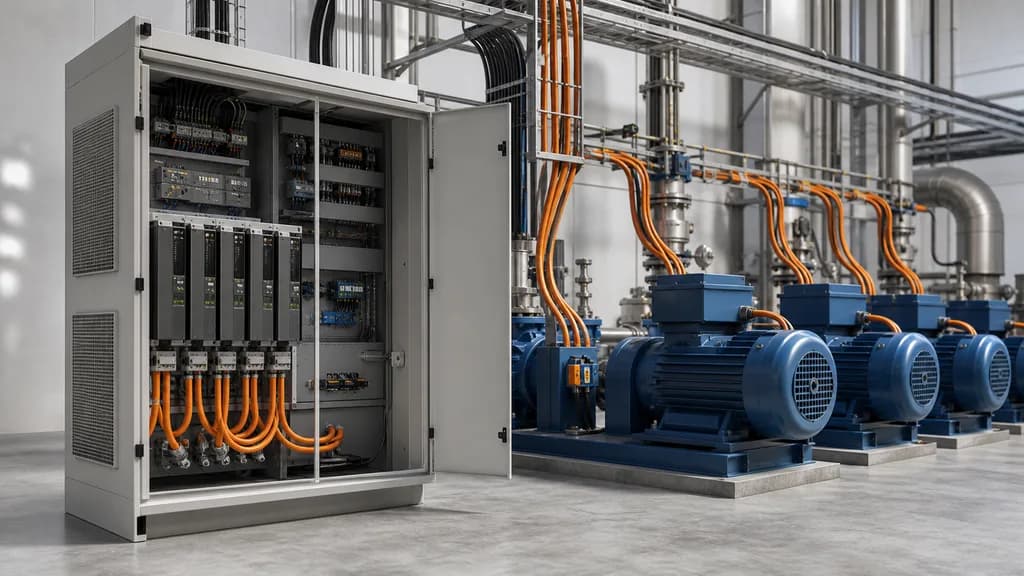
The system behind coordinated control
Drives, motors, control cabinets and industrial communication work as one engineered system.
Conceptual visualization — not a client project or site record.Where this solution fits
- New double-drum winder drive systems
- Drive and control modernization for existing winders
- Lines affected by tension drift, inconsistent roll hardness or unstable stopping
- Projects requiring coordinated unwind, bottom-roll, lead-roll and auxiliary control
Engineering scope
- 01Unwind automatic tension control
- 02Front/rear bottom-roll speed and torque-difference control
- 03Rider-roll pressure and winding-hardness coordination
- 04Length, diameter, reversible operation and controlled deceleration
- 05Drive cabinets, PLC/HMI, instrumentation, interlocking and field commissioning
How the control is structured
- 01
Changing-radius compensation
Torque demand is recomputed as roll radius and inertia grow so tension remains controlled through the winding cycle.
- 02
Torque-difference control
The front and rear bottom rolls carry a controlled torque difference that contributes to finished-roll hardness.
- 03
Coordinated winding loops
Unwind tension, rider-roll pressure and bottom-roll torque act together rather than being tuned independently.
- 04
Controlled stopping
Length/diameter tracking and deceleration logic bring the machine to its target without an uncontrolled tension release.
Typical deliverables
- Winder drive and control architecture
- Motor/drive and sensing interfaces
- PLC/HMI control software
- Control cabinets and operator interface
- Loop tuning, commissioning and operator training
Related engineering evidence
Representative projects
High-speed winder drive control5600 mm width · 1500 m/min · double-drum windingView project →5360 mm rewinder drive control5360 mm width · 2200 m/min · double-drum windingView project →Related insights
Holding constant tension on a high-speed double-drum winderOur double-drum winder drives run at 1500 m/min. As the roll builds, its radius and inertia change — constant-tension control is what keeps the web stable from empty core to finished roll.Read insight →The three functions a winder drive must get rightUnwind tension, rider-roll pressure, reversible control — three functions our high-speed winder drives perform to keep the roll clean.Read insight →Setting winding hardness with bottom-roll torque differenceOn a double-drum rewinder the two bottom rolls do not share torque equally. The difference between them is what sets how hard the finished roll winds — and it has to track the building roll.Read insight →Tension range, winding-hardness targets, pressure curves and acceleration/deceleration profiles must be confirmed against the paper grade, mechanical structure and operating requirements.