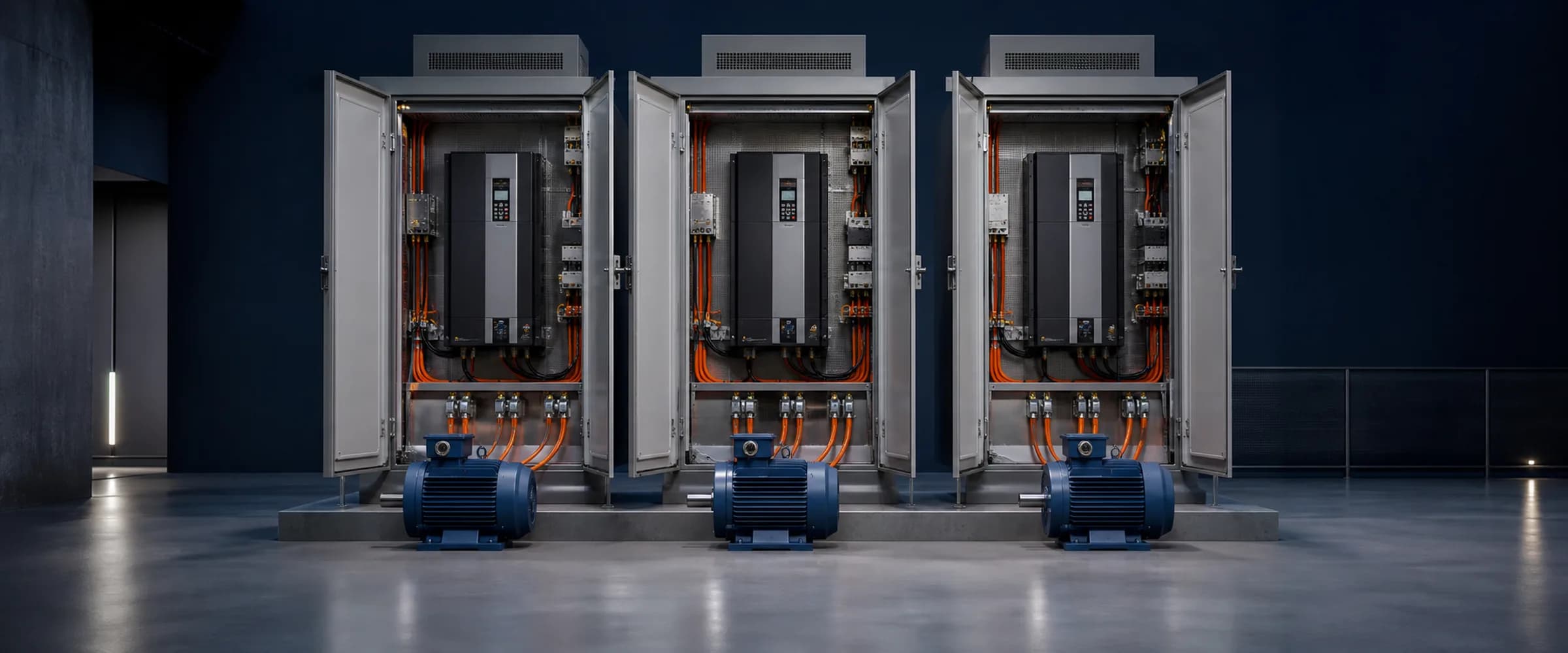
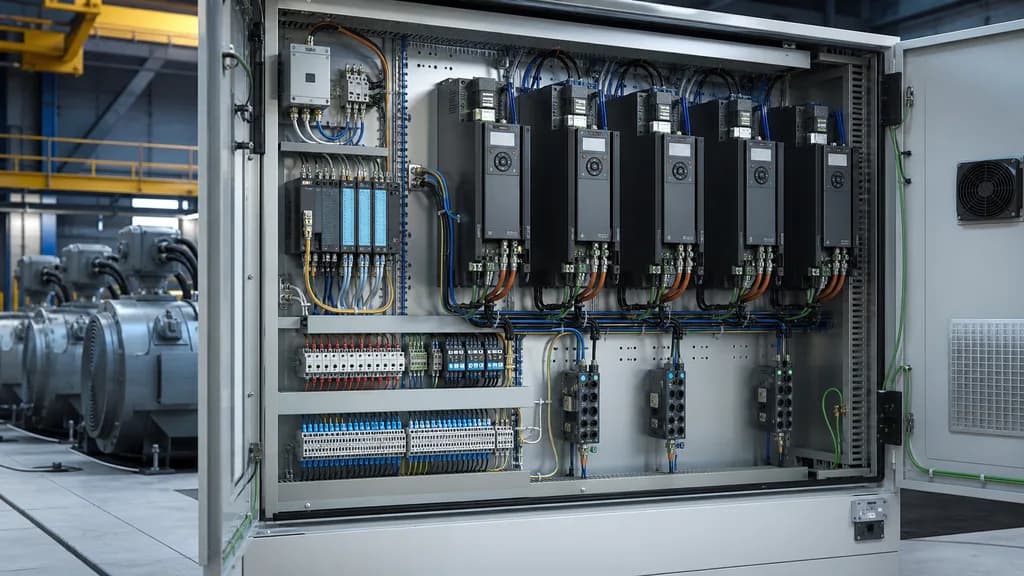
On the wide, high-speed paper machines we drive, the machine is split into independently driven sections — press, dryer, calender, reel — each with its own inverter on the common DC bus. The challenge is not moving each section, but moving them together: the draw, or speed ratio between adjacent sections, defines the web tension through the whole machine.
Speed-chain control sets a reference speed at the lead section and propagates a ratio down the chain, so a speed change at one point ripples through as a controlled draw rather than a shock. On top of that, master/slave load sharing lets a driven section follow a master not just by speed but by torque, so the load distributes correctly — and it adapts automatically as grade, basis weight, machine speed, wire tension and vacuum change.
Coordinated this way from the wet end to the reel, the line holds stable production across a wide operating envelope. On a 4800 mm, 750 m/min machine this is the control structure our drive and MCS package delivers.